
SECOND CHILDHOOD
Boys Will Be Boys... (And Sometimes Men Will Too)

I’ve never believed that an artwork has only one reading. If anything, I’ve come to trust that the strongest works continue asking new questions long after they’ve answered the original ones.
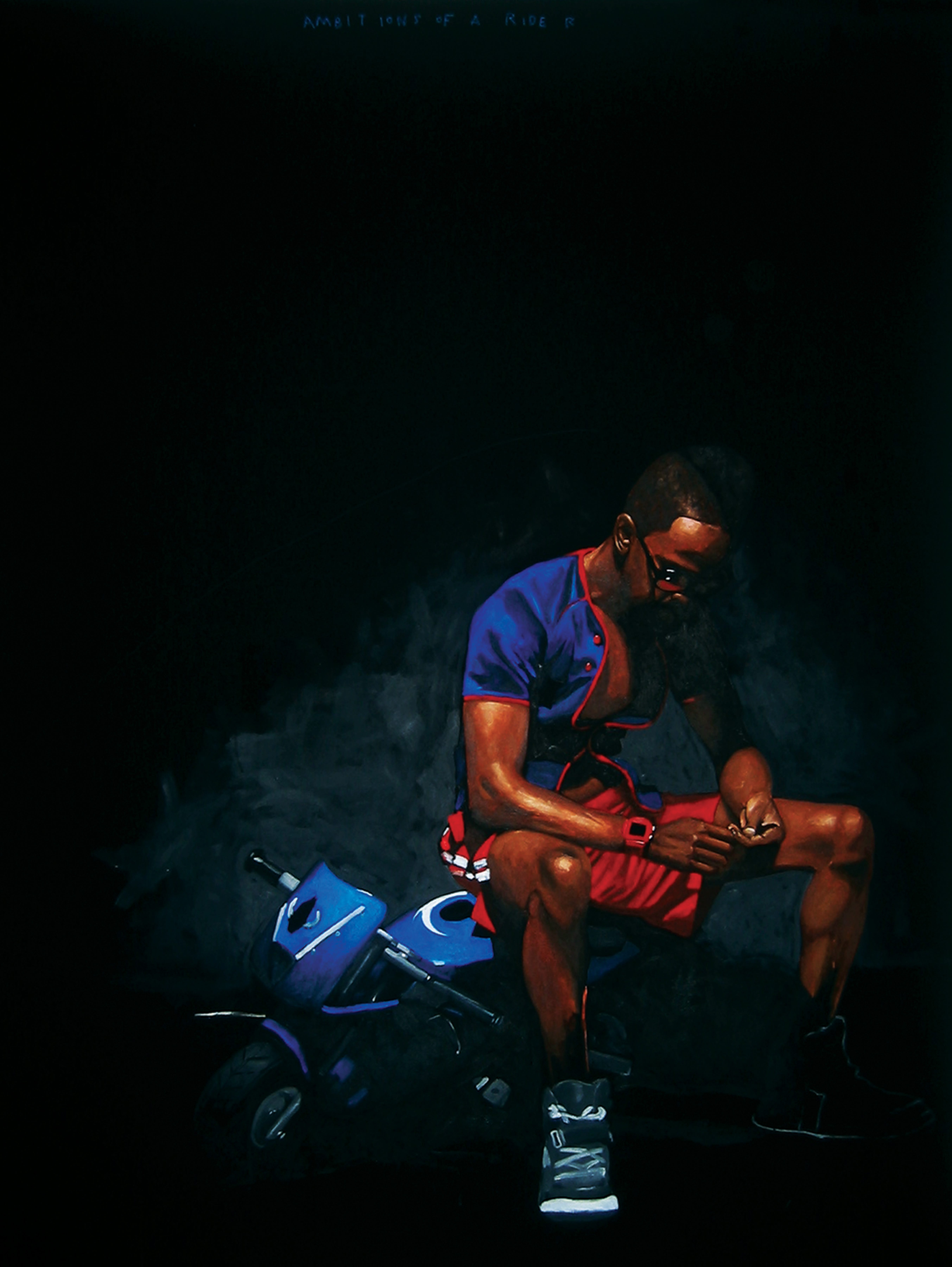
I’ve been thinking recently about a body of work I created nearly twenty years ago called Second Childhood. Looking back through the paintings, rereading the essays, revisiting the conversations that shaped the work, I’m reminded that artworks don’t stop evolving once they leave the studio. They continue accumulating meaning because we do.
Second Childhood is one of those works.
When I began the series, I was interested in what appeared to be a contradiction within representations of Black masculinity, particularly those emerging through hip hop culture. I was fascinated by the persistence of juvenile performance, the ways grown men often seemed socially and culturally tethered to adolescence. Nas captured the phenomenon perfectly in “Second Childhood,” describing men unable, or unwilling, to relinquish their youth.
That observation became the conceptual foundation for the paintings.
Today, however, another question has emerged.
Not because the original question was wrong.
Because it wasn’t finished.
What if what appears to be arrested development is engineered? Not a choice so much as a condition?
One of the realities of growing up Black in America is that the window in which we are allowed to simply be boys is astonishingly brief.
Somewhere around eleven or twelve years old, something shifts.
Not within us.
Around us.
Authority begins reading us differently.
Teachers. Administrators. Store owners. Police officers. Neighbors.
The same behaviors that are dismissed as childish curiosity in other children become interpreted as aggression, defiance, or threat in Black boys. Innocence becomes increasingly unavailable. Childhood itself begins to feel conditional.
Long before we understand adulthood, we begin experiencing its consequences.
It is a peculiar contradiction.
Society often denies Black boys the protections of childhood while simultaneously denying Black men the privileges of adulthood.
We become adults too early and never quite adult enough.
That paradox has lingered with me.
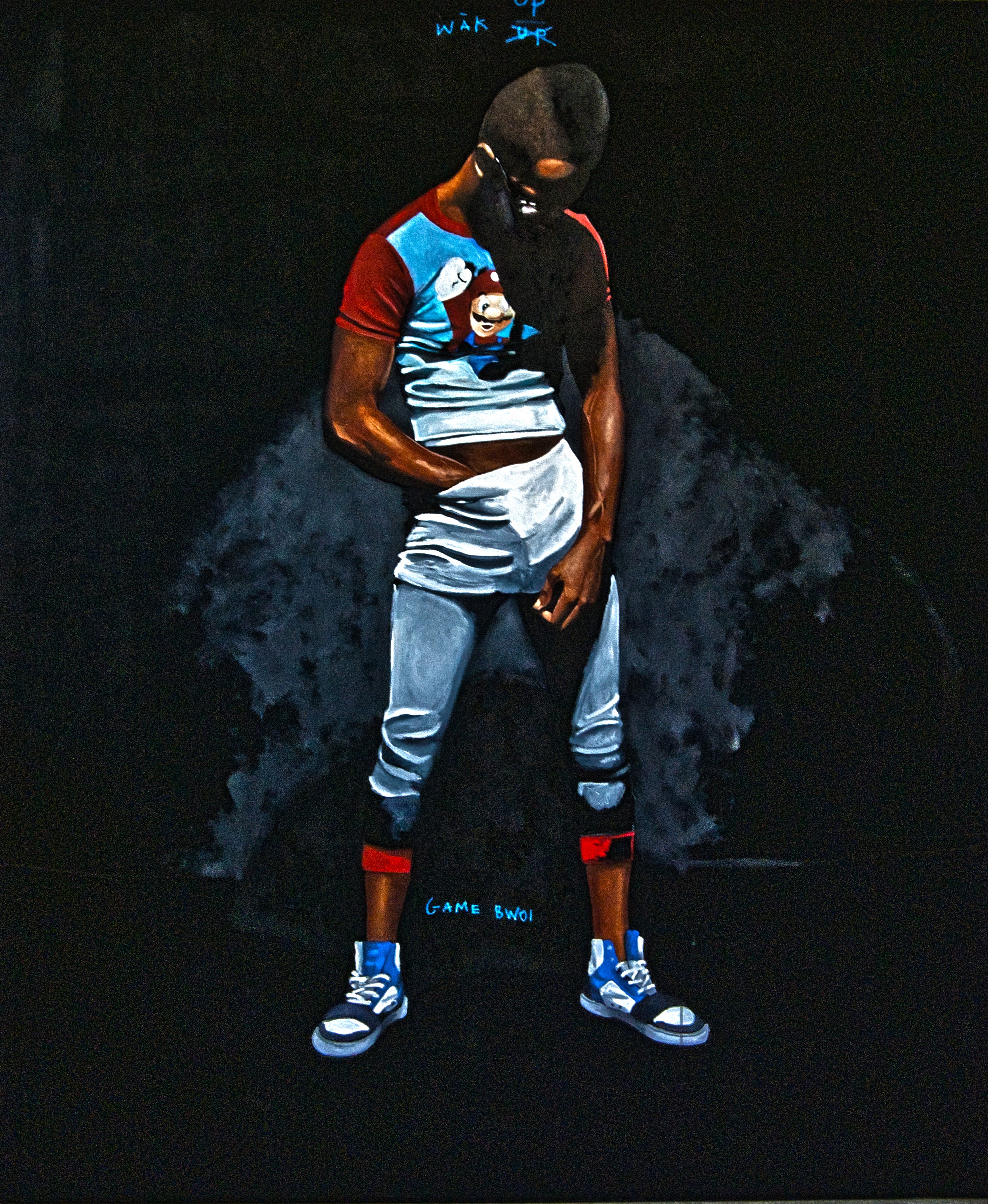
When I photographed myself wearing children’s clothing for Second Childhood, I intended the gesture as satire. The images exaggerated the absurdity of grown men clinging to juvenile performances of masculinity.
I still believe that reading is there. But now I also see something else. The paintings now seem to speak of longing. Not a longing to escape responsibility. A longing to recover a developmental space that was prematurely closed. Childhood is where we first learn to imagine ourselves.
It is where experimentation is expected.
Where mistakes are survivable.
Where failure is instructional rather than defining.
Perhaps what we often dismiss as infantilism is, in some instances, the psyche returning to complete an interrupted chapter.
I’ve noticed a pattern throughout my practice.
Questions rarely disappear.
They evolve.
Years ago my interest in sagging began as a critique of style and representation. Over time those investigations became questions about oppositional fashion, cultural refusal, and what I would eventually describe as obstinate resistance. The work didn’t change because the earlier ideas failed. It changed because following one question honestly often reveals another waiting just beneath it.
Second Childhood feels similar.
What began as an investigation into performances of Black masculinity has gradually become a meditation on the precarious nature of Black identity formation in a world rooted in anti-Blackness.
And perhaps those are not separate conversations at all.
Perhaps one has always contained the other.
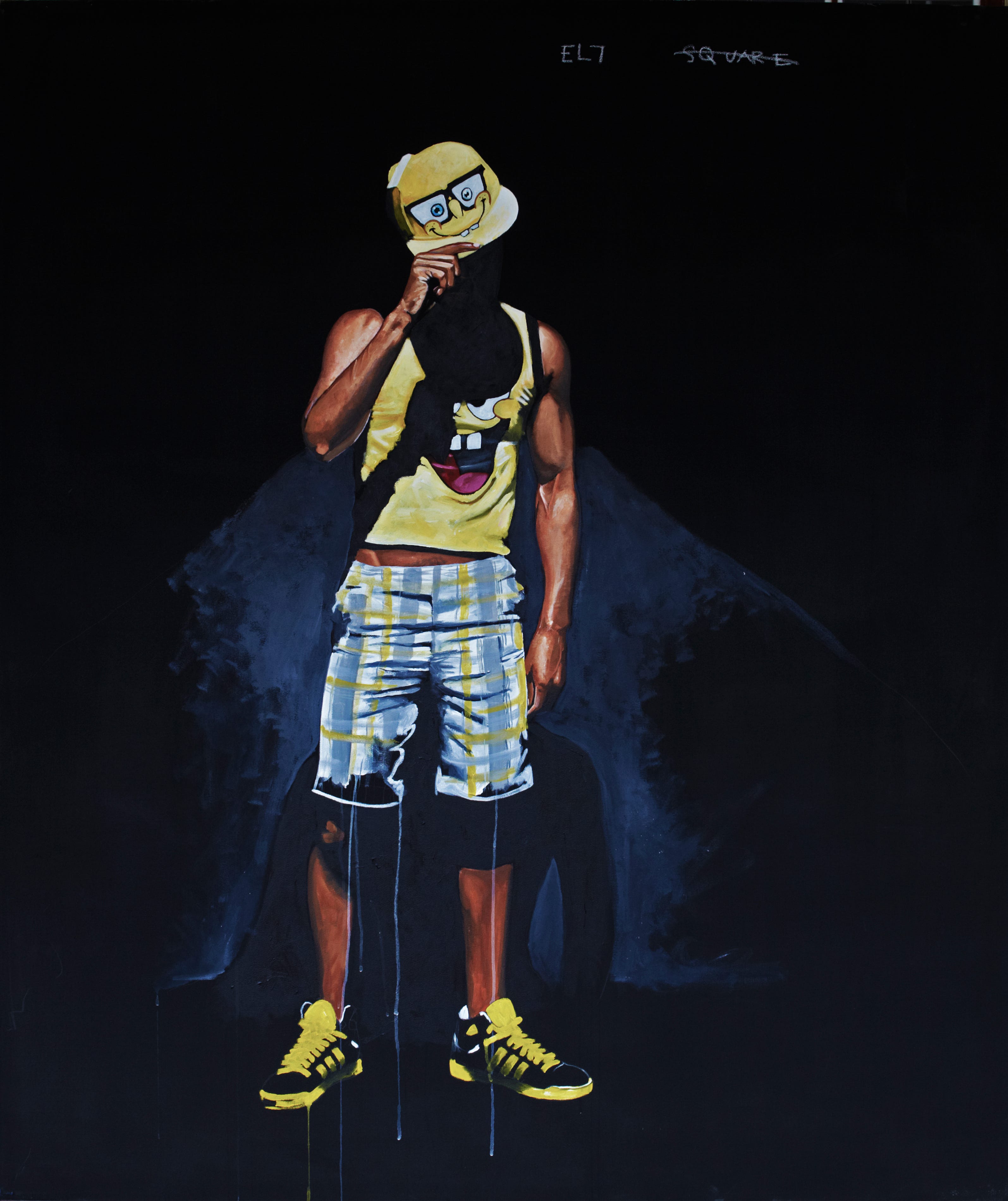
In many ways these interrogations compel me beyond surface readings. They force me to get beyond judgement and closer to understanding. More and more, I find myself thinking less about why Black men struggle under the weight of expectation and more about the conditions that shape aspiration itself.
How do you imagine limitless possibility if the period of your life devoted to imagination was cut short?
How do you learn to dream expansively when you’ve spent adolescence convincing the world… and yourself… that you are already a man?
Those questions were already present in Second Childhood.
I simply hadn’t followed them far enough.
Looking back now, I don’t see a different work.
I see a longer conversation.
One that begins with representations of Black masculinity, moves through Black boyhood, and continues toward a broader meditation on possibility, vulnerability, and the developmental spaces we are too often denied.
Maybe that is what growing up in general is all about.
Not abandoning old ideas.
But allowing them enough time to reveal everything they have been trying to say.
This is such an insightful piece Fahamu. Adding to the 'little man' 'big kid' syndrome, many of us came from single parent homes. It wasn't just around us, it was within our households. Many of us had had the extra burden to be the 'man of the house' and assume adult like responsibilities at a very young age adding to the phenomenon that you've so sharply laid out.
The adultification of youth robs a whole generation of their gestational period of growth and curiosity, the celebration of questions while the answers shape a trajectory towards who we become as adults. (fwiw as the 6th of 6 children, I'm envious of those who enjoyed emerging into their own adulthood...to my elder siblings, I'm still the shrimp, never smart enough or capable of making decisions for myself, to them, I will never be a grown up)
Yes, questions evolve. With age, we can let go of the notion that there are answers and appreciate the processes of discovery and uncertainty. When I read "Over time those investigations became questions about oppositional fashion, cultural refusal, and what I would eventually describe as obstinate resistance." Is it about a process or is it an end point in and of itself? Is it that very "obstinate resistance" that paves one's path leading towards individuality, expression and wholeness?